Three things I have built: a library from my thesis, a system that reviews reports with LLMs, and a public data service for AI assistants.
01 · Open-source library · From my thesis
expert-priors
Can an LLM’s domain knowledge help a model survive distribution shift?
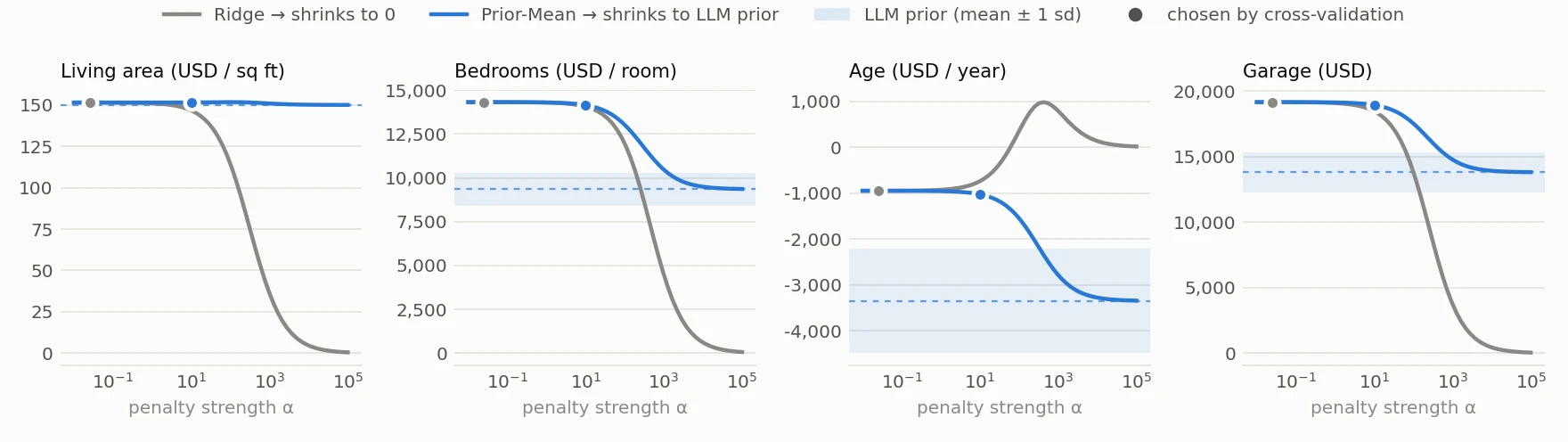
Ordinary regularisation shrinks every coefficient toward zero. expert-priors asks a language model what the coefficients should look like, turns its answers into a prior, and shrinks toward that instead. Cross-validation decides how much to trust it, so when the data speaks clearly, the model follows the data.
Ridge shrinks to zero; the prior-informed model shrinks to the LLM prior.
import expert_priors as ep

# Ask the LLM for coefficient draws (cached)
priors = ep.elicit_priors(X, y, task="regression",
                          auto_context=True)

# Fit like any scikit-learn model
model = ep.PriorMeanRidge(priors).fit(X_train, y_train)
02 · LLM evaluation system
AI Report Evaluation
Can an LLM review a building inspection report the way an expert would?
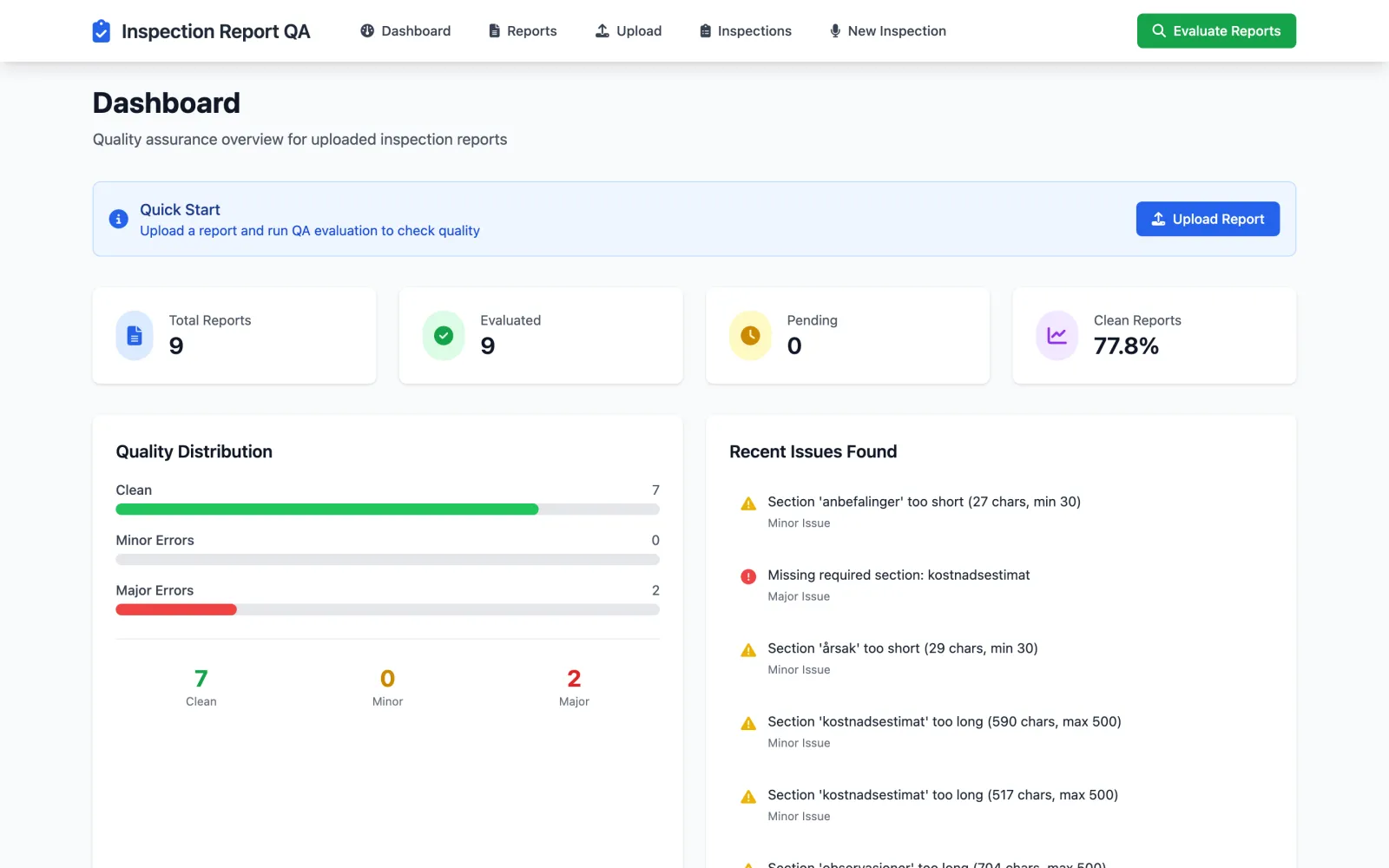
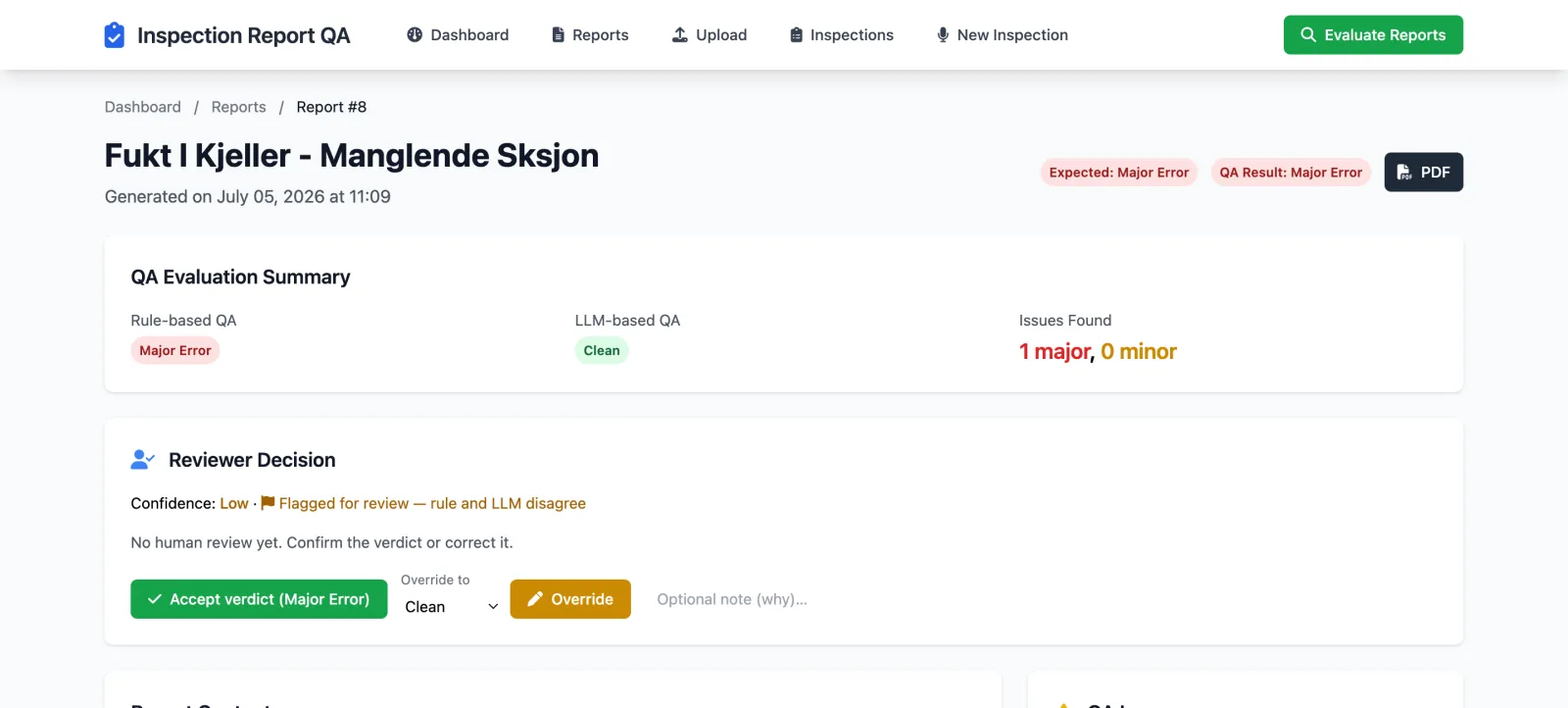
Quality control for Norwegian building inspection reports. Deterministic rules, an LLM judge and retrieval from previously reviewed reports grade each one as clean, minor error or major error. When rules and model disagree, the report is flagged for a person to decide.
In agentic review mode the model looks up rules and examples, reruns checks and verifies passages before it answers. Reports can also be drafted from site visits, with voice notes and photos.
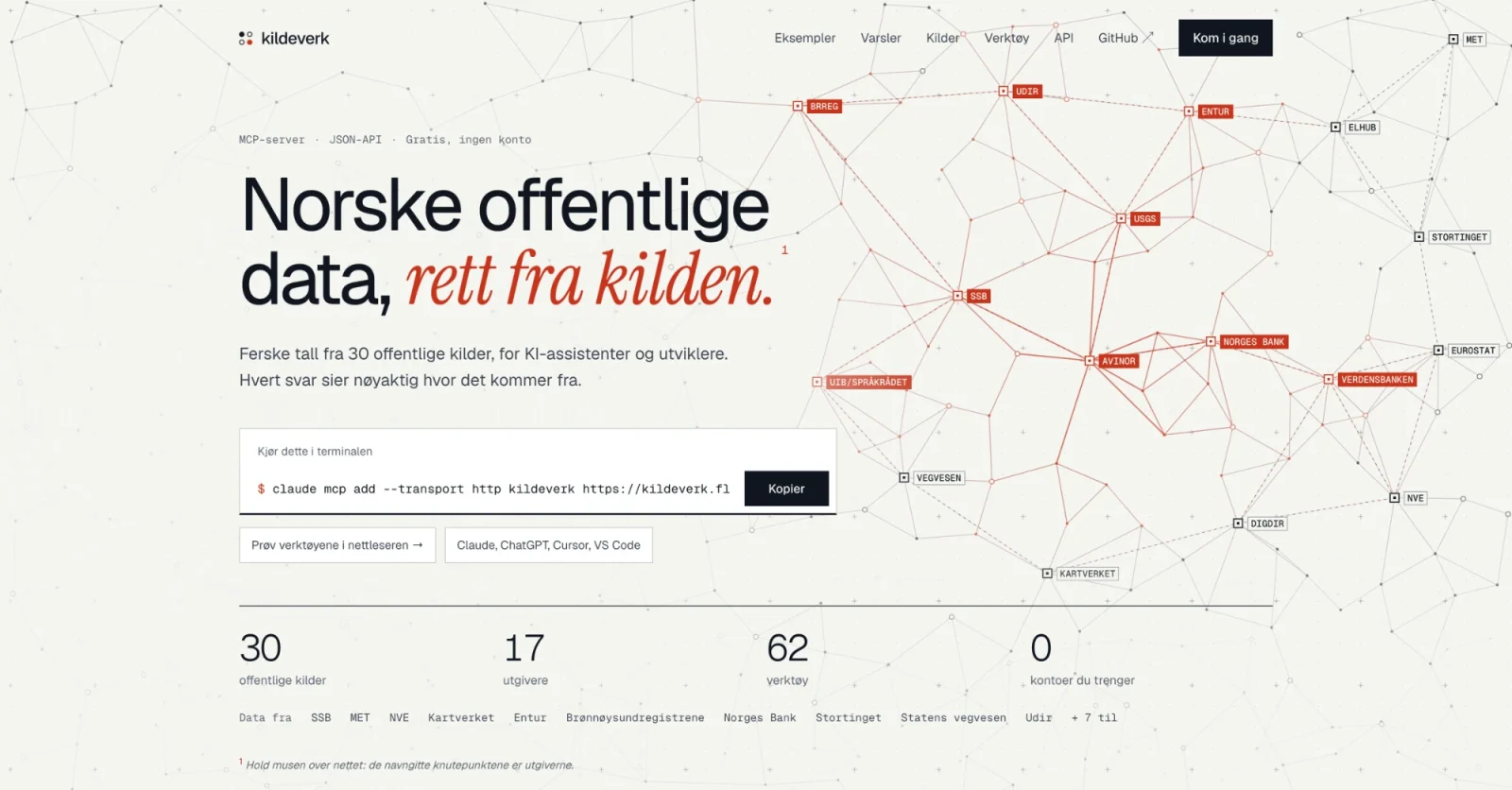
What if every AI answer about Norway came with its source?
Norwegian public data, straight from the source. A free service, with no account needed, that gives AI assistants and developers current figures from SSB, the Meteorological Institute, NVE, Kartverket, Entur, Brønnøysundregistrene and more. Every answer states where its data came from.
LLM knowledge for improved Out-of-Distribution Tabular Prediction
With Kristoffer Herland Hellton and Hugo L. Hammer. LLM-generated priors as the shrinkage target in regularised regression improved out-of-distribution prediction on four of five datasets.
Using LLM Knowledge for Improved Out-of-Distribution Tabular Prediction
Graded A, written in collaboration with Simula Research Laboratory. Three estimators that bring LLM-elicited priors into regularised linear and logistic regression.
I hold an MSc in Bioinformatics and Applied Statistics from NMBU (2026), with an A on my master’s thesis, completed in collaboration with Simula Research Laboratory. I enjoy building and testing solutions in Python, and I have experience with both traditional machine learning and systems built around large language models.
Most of all, I love tinkering with new systems. Lately that means coding agents: building my own harnesses and networks of agents, and seeing how far they can be pushed. Many of my favourite projects started as a small experiment that grew into something real. If you are building in that space too, I would love to hear about it.
MSc in Bioinformatics and Applied StatisticsNMBU · 2024–2026
Computer Science courseworkUniversity of Bergen · 2023–2024
BSc in BiologyUniversity of Bergen · 2020–2023
Skills
Python
R
SQL
Bash
PyTorch
scikit-learn
LLM integration
LLM evaluation
RAG
Embeddings and retrieval
Tool use
Agentic workflows
Coding agents
Structured outputs
Multimodal models
MCP
Regression and classification
Regularisation
Neural networks
Bayesian methods
Cross-validation
Model evaluation
Flask
FastAPI
API integration
Docker
Git and GitHub
Linux
HPC and Slurm
arXiv 2610.36806 · cs.LG · 27.10.2026
Sølve Langseth, Kristoffer Herland Hellton, Hugo L. Hammer
Prediction models often perform worse when they are used on a population that differs from the one they were trained on. We test whether coefficient priors generated by large language models, used as the shrinkage target in regularised regression instead of zero, improve out-of-distribution prediction on five tabular datasets. Providers and prior structures are selected using only source-domain cross-validation.
Better on four of five datasetsUp to 7.9% lower out-of-distribution error
MSc in Bioinformatics and Applied Statistics, NMBU, 2026 · Grade A. Written in collaboration with Simula Research Laboratory.
Models trained on one population can lose performance on another. The thesis develops three estimators that bring coefficient priors elicited from large language models into regularised linear and logistic regression. The LLM and the prior strength are both chosen by cross-validation, and the estimators are evaluated on five tabular datasets.
Significantly better out-of-distribution predictionPrior-informed estimators beat a regularised baseline on four of five datasets
MSc in Bioinformatics and Applied Statistics from NMBU (2026), with a thesis on using language models as a source of knowledge for statistical models. I build in Python, from classical machine learning to LLM systems with retrieval, tool use and structured outputs.
EducationMSc Bioinformatics and Applied Statistics, NMBU · Computer Science coursework and BSc in Biology, University of Bergen